Medically Reviewed by Dr. Michael Clemente, D.M.D. on September 16, 2026
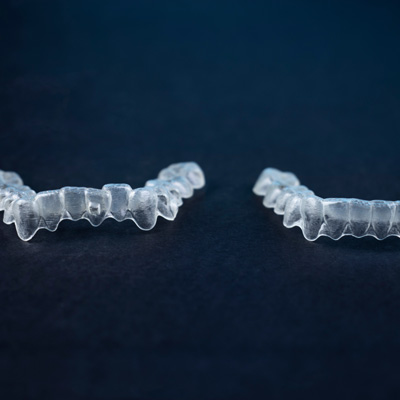 Invisalign® can treat most of the problems people see an orthodontist for, including crowded teeth, gaps, deep overbites, overjet, underbites, crossbites, open bites, and teeth that have drifted after earlier braces. How well it handles each one depends less on the name of the problem and more on two questions: what kind of tooth movement the correction needs, and whether the issue sits in the teeth or in the size and position of the jaws themselves.
At Clemente Orthodontics, our orthodontists plan every Invisalign® case in-house, and as a Sapphire Invisalign® provider our practice treats a high volume of aligner cases across our New York and New Jersey offices. Below, we walk through the common issues one at a time: what aligners do for each, which add-on tools are usually involved, and the signs that a case may call for a different or combined approach.
How Invisalign® Handles Each Common Orthodontic Issue
Every aligner tray is programmed to move specific teeth a small distance before you switch to the next one. The same basic mechanics apply to every problem below, but the tools and the predictability change from one issue to the next.
Crowded Teeth
Aligners relieve crowding by creating room in the arch. Depending on the case, that room can come from modest widening of the arch, slightly tipping the front teeth forward, or gentle polishing between teeth (interproximal reduction) to gain fractions of a millimeter. Mild to moderate crowding is one of the corrections aligners handle most predictably, and straighter teeth are easier to brush and floss once treatment ends. Severe crowding that requires removing teeth adds complexity, but it does not automatically rule aligners out.
Gaps Between Teeth
Aligners close spaces by guiding teeth toward each other, including the gap between the two upper front teeth known as a diastema. Small and moderate spaces usually close well. Very large gaps caused by missing or undersized teeth sometimes respond better to a combination of orthodontic movement and restorative work from your dentist, such as bonding. We also look at why the gap formed, because a tongue habit or a large lip attachment can let a closed space reopen if it is not addressed and retained.
Deep Overbite
A deep bite means the upper front teeth cover too much of the lower front teeth vertically. Aligners can correct many deep bites by leveling the lower teeth and gently intruding the front teeth, and precision bite ramps built into the trays can help open the bite. If you are not sure whether your concern is vertical overlap or front teeth that stick out, our post on overjet versus overbite explains the difference.
Overjet and Upper Teeth That Stick Out
Overjet is horizontal: the upper front teeth sit well ahead of the lower ones. Aligners often work together with small elastics hooked to the trays, and our guide to rubber bands for overbite correction explains how those elastics shift the bite. In growing patients, aligner systems with mandibular advancement features can encourage the lower jaw forward. In adults whose lower jaw is significantly behind, a combined plan may be needed.
Underbite
A mild underbite caused by tooth position, where the lower front teeth sit only slightly ahead of the uppers, can often be corrected with aligners and elastics. A skeletal underbite in an adult, where the lower jaw itself is oversized or positioned too far forward, generally needs orthodontics coordinated with jaw surgery to correct fully.
Crossbite
Crossbites involving one or two teeth respond well to aligners. A crossbite on the back teeth caused by a narrow upper jaw is different: in children, the palate can still be widened while it grows, while in adults aligners can achieve only modest dental expansion and cannot widen the bone itself. Our guide to overbites, underbites, and crossbites breaks down how each of these issues is diagnosed, and our article on crossbite treatment options for kids and adults covers expanders and other approaches.
Open Bite
With an open bite, the front teeth do not meet when you bite down. Many orthodontists consider aligners a reasonable fit for certain open bites, partly because the plastic covers the chewing surfaces of the back teeth. Habits such as tongue thrusting or prolonged thumb sucking need attention too, since they can pull an open bite back apart after treatment.
Teeth That Shifted After Braces
One of the most common reasons adults ask about Invisalign® is that teeth straightened years ago have started to drift, often after a retainer stopped being worn. Mild relapse is frequently a good fit for a shorter aligner series, followed by consistent retainer wear. Our post on what happens when you stop wearing your retainer explains why this shifting happens.
What Invisalign® Typically Cannot Fix on Its Own
Research on clear aligners helps explain where the limits are. A systematic review in The Angle Orthodontist found aligners generally effective for leveling and aligning the arches and for controlling front tooth intrusion, while extrusion (bringing a tooth down into the bite) and rotation of rounded teeth such as canines and premolars were the hardest movements to control. That is why Invisalign® attachments and planned Invisalign® refinements exist, and why the following situations often lead us to recommend a different or combined plan:
- Skeletal jaw discrepancies: upper and lower jaws significantly mismatched in size or position, especially in adults who are no longer growing.
- Severely rotated rounded teeth: canines and premolars turned far out of position.
- Impacted teeth: teeth trapped below the gums that must be brought into the mouth.
- Large vertical movements: teeth that need to be pulled down a significant distance.
- Inconsistent wear: aligners that are not worn 20 to 22 hours a day cannot deliver the planned movement.
Some of these cases are treated with traditional braces, and in rare cases surgical orthodontics. None of this rules Invisalign® out before a consultation, and our article on whether Invisalign® is a good option for complex cases covers that gray zone in more depth. For the research on overall success rates and what drives them, see our post on how well Invisalign® works.
How Age Changes What Invisalign® Can Treat
Age matters most for the bite problems, because growth is a tool orthodontists can use. Children can begin Invisalign® First around age 7 as part of early orthodontic treatment, when the upper arch can still be developed and crossbites caught early. Teens still have growth left to help correct overjet and some jaw relationships, and our teen Invisalign® program adds features for teeth that are still coming in.
Adults can treat crowding, spacing, relapse, and most dental bite problems with aligners just as well, but a true skeletal problem in an adult stays skeletal. Our guide to knowing if you are a candidate for Invisalign® walks through the other factors we consider at a first visit.
What We Look at During Your Invisalign® Evaluation
Matching your issue to the right treatment starts with a complete picture. At your complimentary consultation, we take a digital scan of your teeth with our iTero scanner, review X-rays, and look at how your bite comes together from the front, side, and top. That tells us whether your concern is dental, skeletal, or both, and which tooth movements your correction depends on.
From there, our orthodontists program your tooth movement themselves and tell you plainly if traditional braces or a combined approach would give you a better result faster. You will know the expected timeline, whether attachments or elastics are likely, and how long you will need to wear a retainer before you commit to anything.
Why Choose Clemente Orthodontics for Invisalign® Treatment?
At Clemente Orthodontics, we are committed to providing personalized and effective orthodontic care. As a Sapphire Invisalign® provider, our practice is among the top 1% of Invisalign® providers nationwide, which means our doctors have planned aligner treatment for a wide range of crowding, spacing, and bite problems. Whether you are facing minor misalignment or a complex bite, our team of orthodontists can help you understand your options and choose the right one.
Our family practice has decades of experience serving patients of all ages throughout New York and New Jersey, and every treatment plan is built around your specific bite. If you are ready to find out what Invisalign® can do for your smile, visit our contact form.
Frequently Asked Questions About Invisalign® Treatment
Can Invisalign fix a bad bite, like an overbite or underbite?
Invisalign can correct many mild to moderate overbite and underbite cases, often with elastics attached to the aligners. Bite problems caused by the size or position of the jaws, especially in adults who are no longer growing, may need traditional braces or a combined orthodontic and surgical approach instead.
Will I need traditional braces if I have severe crowding?
Not always. Aligners can create space through arch widening, slight tipping of the front teeth, or polishing between teeth, so many severely crowded cases are still treatable. A small number of very complex cases, such as those needing extractions with large root movements, are better served by braces. An in-person evaluation is the only reliable way to know which applies to you.
Can Invisalign treat a crossbite?
Many crossbite cases respond well to Invisalign, particularly when the crossbite involves individual teeth rather than a narrow upper jaw. Children can often have the upper arch widened while they are still growing, while adults with a skeletal crossbite may need a different approach. Your orthodontist will confirm whether your specific crossbite is a good fit during your consultation.
Does Invisalign work for an open bite?
Invisalign can be a good fit for many open bites caused by tooth position. Any habit that contributed to the open bite, such as tongue thrusting or thumb sucking, also needs to be addressed so the bite stays closed after treatment. Open bites rooted in jaw growth may need a combined plan.
How do I know if I am a good candidate for Invisalign?
The clearest way to know is a consultation with digital scans and X-rays, since candidacy depends on the specific type and severity of misalignment and on whether you can wear aligners 20 to 22 hours a day. Most teens and adults with common alignment or spacing issues are strong candidates.
What happens if Invisalign alone cannot fully correct my bite?
Your orthodontist will discuss alternatives at your consultation, which may include traditional braces, a phase of limited orthodontic treatment, or coordination with another provider for more complex jaw issues. You will know your options before starting any treatment.
About the Author
Founder, Clemente Orthodontics
Dr. Michael Clemente earned his D.M.D. from Rutgers and a certificate in Orthodontics and Dentofacial Orthopedics. He has practiced orthodontics for more than 50 years, served as an Air Force Captain, and founded the multigenerational family practice now joined by his three daughters.

Medically reviewed by:
The Orthodontic Team at Clemente Orthodontics
October 19, 2026
At Clemente Orthodontics our expert dental team takes great care in providing orthodontic treatment and Invisalign solutions for our patients.