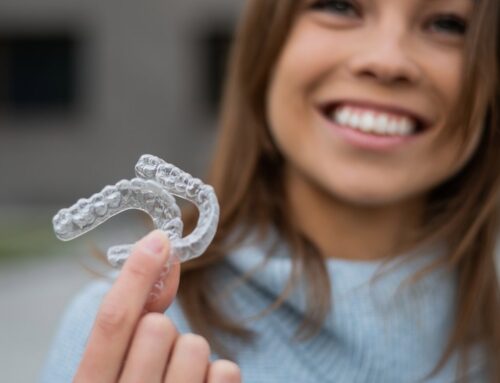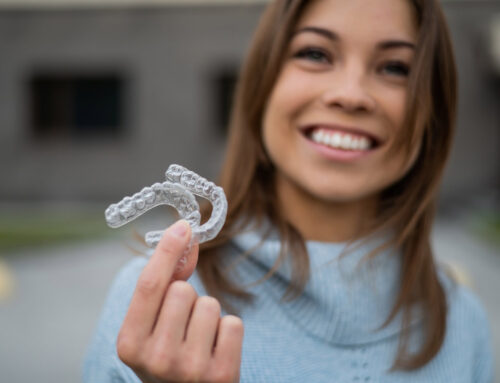
 You put in the time, wore the braces or Invisalign®, and finally got the result you worked for. Then life got busy, and the retainer started sitting in its case more often than it sat in your mouth. It is one of the most common things that happens after orthodontic treatment, and it is also one of the most consequential. Teeth do not stay in place on their own after treatment. The bone and tissue surrounding them are still adapting to their new positions, and without something holding them there, they will begin to drift. That shift is called relapse, and it happens faster than most people expect.
At Clemente Orthodontics, we talk about retainer wear with every patient who finishes treatment at our New City, Woodcliff Lake, and Ridgewood offices, because protecting the result is just as important as achieving it. Dr. Michael Clemente, Dr. Nicole, and Dr. Marissa have seen firsthand how quickly teeth can shift when retainers go unworn, and how discouraging that can be after everything a patient has invested. Understanding why relapse happens is the first step toward making sure it does not happen to you. For a full picture of the retainer options we offer, our retainers page has helpful details on what to expect after active treatment ends.
Why Do Teeth Shift After Orthodontic Treatment?
Teeth are not anchored rigidly in the jaw. They are held in place by a network of fibers, connective tissue, and bone that responds constantly to the forces placed on them. During orthodontic treatment, those structures are slowly remodeled as teeth move into new positions. Once treatment ends and braces or aligners are removed, those same structures still have a memory of where the teeth used to be, and they create pressure that pulls teeth back in that direction.
According to the American Association of Orthodontists, teeth will attempt to return to their original positions after treatment ends, as no active force is being applied to keep them in place. This tendency does not disappear after a few months. For most people, it continues to some degree throughout their lifetime, which is why retainer wear is a long-term commitment rather than a short-term phase.
How Quickly Can Relapse Happen?
The speed of relapse varies from person to person, but the early months after treatment are when teeth are most vulnerable to movement. During this window, the bone around the teeth is still consolidating, which means even a few weeks without a retainer can result in noticeable shifting. Some patients notice their retainer feels tight after skipping just a few nights, which is a sign that movement has already begun.
The extent of relapse also depends on how much tooth movement occurred during treatment and which teeth were involved. Front teeth, especially the lower front teeth, tend to be particularly prone to crowding back together over time. In cases where a patient had significant crowding before treatment, a permanent retainer bonded behind the front teeth may be recommended alongside a removable one to provide continuous protection where it is needed most.
What Are the Signs That Your Teeth Have Shifted?
Not everyone notices relapse right away, but there are clear signs to look for. Catching shifting early gives you a much better chance of correcting it without returning to full orthodontic treatment. Common signs include:
- A retainer that feels tight, uncomfortable, or no longer fits the way it used to
- Visible crowding or gaps that were not present at the end of treatment
- A change in how your upper and lower teeth come together when you bite down
If your retainer no longer fits at all, do not try to force it. That is a signal to reach out to your orthodontist right away. Our page on tips for caring for your retainer covers what to do if you notice fit changes or damage.
Can You Fix Relapse Without Going Through Full Treatment Again?
In mild cases caught early, a new retainer or a short course of clear aligner treatment may be enough to bring teeth back into alignment. The longer relapse goes unaddressed, the more involved the correction tends to be. Significant shifting may require retreatment that is comparable in length and cost to the original treatment, which is why proactive retainer wear is so much easier than the alternative. The importance of retainers after braces cannot be overstated for exactly this reason.
The good news is that most relapse is preventable with a consistent routine. Wearing your retainer every night is a small habit that protects a significant investment. For patients who find removable retainers difficult to keep up with, a bonded option may be worth discussing with your orthodontist.
Keep Your Results at Clemente Orthodontics
Finishing orthodontic treatment is a real achievement, and a retainer is what makes that result last. Whether you are just wrapping up treatment or wondering what to do about shifting that has already started, we are here to help you figure out the right path forward. Relapse is common, but it is also largely preventable with the right guidance and the right appliance.
The team at Clemente Orthodontics has been helping patients in Bergen and Rockland Counties protect their smiles for decades. As a Diamond Plus Invisalign® Provider and a multigenerational family practice with over 10,000 cases completed, we bring both the experience and the personal attention that post-treatment care requires. To schedule an appointment or ask about your retainer options, contact our office or fill out our online form today.

Medically reviewed by:
The Orthodontic Team at Clemente Orthodontics
March 31, 2026
At Clemente Orthodontics our expert dental team takes great care in providing orthodontic treatment and Invisalign solutions for our patients.