Medically Reviewed by Dr. Michael Clemente, D.M.D. on September 15, 2026
Getting your braces off or finishing your final Invisalign® tray is a moment worth celebrating. But what happens in the weeks and months that follow is what determines whether your results last for years, or begin slowly reversing. Retainers are the part of orthodontic treatment that most patients underestimate until they experience what happens without them.
At Clemente Orthodontics in New City, Woodcliff Lake, and Ridgewood, retention is treated as a core part of treatment, not an afterthought. This guide explains why retainers matter, how they work, and what the retention plan looks like for most patients.
Why Do Teeth Move After Orthodontic Treatment?
Orthodontic treatment moves teeth by applying consistent, controlled force over time. What many patients don’t realize is that the periodontal ligament, the tissue that anchors each tooth to the jawbone, has a memory. After treatment, it continues exerting pressure on teeth toward their former positions. This is called relapse, and it’s not a sign that something went wrong. It’s a biological reality that every orthodontic patient faces.
The rate of relapse varies. Teeth that were severely rotated or crowded before treatment are at higher risk. Front teeth have a natural tendency to crowd over time regardless of prior treatment. And certain bite corrections require especially consistent retention to hold. Without a retainer, some degree of shifting is predictable in most cases, though how much depends on the individual.
Retainers Protect More Than Just Alignment
It is easy to think of a retainer as a tool that only fights against crowding, but retention supports several other parts of a finished result. Keeping teeth in their corrected positions also helps maintain even contact points between teeth, which lowers the chance of new gaps opening up and food catching in spots that were previously tight. For patients whose treatment corrected a bite issue, consistent retainer wear also helps the jaw joint settle into its new relationship rather than drifting back toward strain patterns that existed before treatment.
According to the American Association of Orthodontists, the primary purpose of a retainer is to minimize the natural tendency of teeth to revert to their original positions, and consistent wear as prescribed is what makes that protection effective over the long term.
Types of Retainers Available at Clemente Orthodontics
Our orthodontists customize retention to each patient’s needs. The main options include:
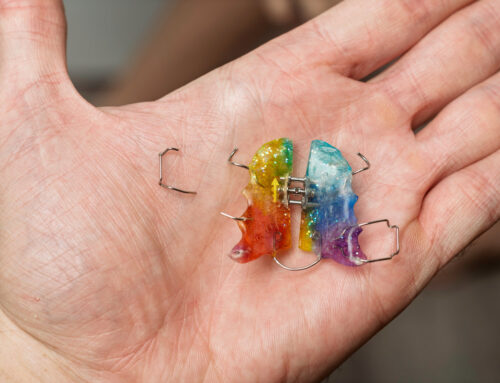
Removable retainers: Clear retainers (similar in appearance to Invisalign® aligners) are the most common choice. They fit over the teeth and are worn nightly. They’re easy to clean, comfortable, and allow for natural speaking during the day. Some patients are better suited to a Hawley retainer instead, which uses a durable acrylic and wire design. We work with patients to choose a schedule and a retainer type that fits their lives while protecting their results.
Permanent (bonded) retainers: A thin wire bonded to the inside surface of the front teeth, typically the lower arch. Permanent retainers provide continuous protection without relying on patient compliance. They require slightly more attention during daily oral hygiene, as flossing around the wire is necessary. Many patients use both a bonded retainer and a removable one for comprehensive protection.
For a detailed comparison of both retainer types and how to choose, read our guide to invisible vs. permanent retainers.
How Long Do You Need to Wear a Retainer?
The short answer is indefinitely, though the required frequency decreases over time. Teeth do not stop wanting to shift at a certain age. Retainer wear that stops entirely, even years after treatment, can result in gradual movement.
A typical retention protocol at our practice:
- First six to twelve months: Full-time or nightly wear as directed by your orthodontist
- Year one through year two: Transition to nightly wear as teeth stabilize
- Long-term: Nightly or several nights per week indefinitely
We build retention schedules that are realistic for each patient’s age, lifestyle, and case. The goal is protection that actually gets followed.
What Happens If You Stop Wearing Your Retainer?
The consequences depend on how long you go without wear and how susceptible your teeth are to movement. In the first weeks after treatment, skipping nights can produce noticeable tightness when you put the retainer back in, a sign that movement has already begun. If a retainer stops fitting altogether rather than just feeling snug, our guide on what to do when a retainer no longer fits walks through the next steps. Over months and years, gaps can reopen, crowding can recur, and bite corrections can unravel.
The most common scenario we see: a patient wears their retainer faithfully for a year, becomes inconsistent, and then notices shifting in their late twenties or thirties. By that point, a new course of orthodontic treatment may be the only way to restore the original result. Consistent nightly wear is significantly less costly and inconvenient than retreatment.
How to Care for Your Retainer
- Rinse your retainer with cool water each time you remove it
- Brush it gently with a soft toothbrush, avoiding toothpaste, which can be abrasive
- Store it in its case when not in use, since heat warps the material
- Bring it to your orthodontic check-ups so we can inspect it for wear
- Replace it if it develops cracks, becomes uncomfortable, or no longer fits properly
If you lose or break a retainer, contact our office promptly. Our guide on what to do if you lose your retainer covers the steps to take while a replacement is arranged. A gap in retainer wear allows shifting, so the sooner a replacement is made, the less likely significant movement will occur.
Frequently Asked Questions About Retainers
My retainer feels tight. Does that mean my teeth shifted?
Yes, tightness when inserting your retainer is a sign that some movement has occurred. If the retainer still fits, even if snugly, continue wearing it as directed. If it no longer seats properly, contact us for an evaluation.
Can I switch from a removable retainer to a permanent one after treatment?
In some cases, yes. Our orthodontists can evaluate whether a bonded retainer is appropriate for your situation. This is often worth discussing if compliance with removable wear has been inconsistent.
Do retainers change over time?
Clear retainers do wear down, can stain, and may lose their precision fit over several years of use. Plan to replace them periodically, and we recommend keeping a current impression on file so replacements can be made quickly if needed.
How much does a replacement retainer cost?
Replacement cost varies by retainer type. Ask our team at your next visit so we can discuss the options and what is appropriate for your current needs.
Should I still wear a retainer if I only had minor orthodontic treatment?
Yes. Even minor corrections involve the same periodontal ligament memory that drives relapse in larger cases, so skipping retention after a small treatment can still allow noticeable shifting over time.
Your smile is worth protecting. If you have questions about your retainer, need a replacement, or are starting to notice shifting and want to understand your options, contact us at our New City, Woodcliff Lake, or Ridgewood office. Our team at Clemente Orthodontics is here to help you keep the results you worked for.
About the Author
Founder, Clemente Orthodontics
Dr. Michael Clemente earned his D.M.D. from Rutgers and a certificate in Orthodontics and Dentofacial Orthopedics. He has practiced orthodontics for more than 50 years, served as an Air Force Captain, and founded the multigenerational family practice now joined by his three daughters.

Medically reviewed by:
The Orthodontic Team at Clemente Orthodontics
September 15, 2026
At Clemente Orthodontics our expert dental team takes great care in providing orthodontic treatment and Invisalign solutions for our patients.