A small gap between two teeth can feel surprisingly noticeable. So can crowding that makes flossing difficult or a smile that does not look quite the way you hoped. When an orthodontist adds a power chain to braces, patients often start watching their teeth closely for signs of change. The question is natural: what should you expect to see, and how quickly?
Power chains can help move teeth closer together and close selected spaces, but the transformation is not identical for everyone. Your starting alignment, the size and location of gaps, the way your teeth respond, and your orthodontist’s treatment plan all affect the timeline. The month-by-month guide below explains common stages without treating them as a promise or a fixed schedule.
Key Takeaways
- Power chains are connected elastic loops that apply continuous force through braces to help move teeth, often to close spaces.
- Visible changes may develop gradually; the first few weeks can involve pressure and adjustment rather than an obvious cosmetic difference.
- There is no universal month-by-month schedule. Your orthodontist decides when a power chain is appropriate and how long it should remain in place.
- Good brushing, careful flossing, and keeping adjustment appointments support a healthier treatment process.
What Are Power Chain Braces?
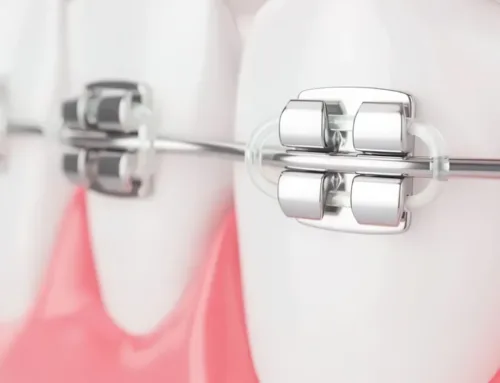
A power chain is an elastic material made of connected loops. Instead of a separate small elastic ligature around each bracket, the chain links several brackets together. When fitted by an orthodontist, it can apply a steady pulling force across the connected teeth. This is one way braces can help close spaces or coordinate tooth positions as treatment progresses.
Power chains come in different configurations. A chain may connect a few teeth or extend across a longer section of the arch. The orthodontist chooses the arrangement and strength based on the movement required. The chain is not simply a stronger version of a regular elastic tie for every patient; it is a treatment component used for a particular purpose.
The FDA explains that orthodontic movement must happen slowly and that overly rapid movement can harm the supporting structures. Read the FDA’s guidance on braces and clear aligner options.
Why Do Orthodontists Use Power Chains?
One common reason is space closure. Some patients have gaps between teeth that need to be reduced as part of their overall bite and alignment plan. A power chain can help draw selected teeth toward one another. It may also help maintain or manage spaces during a particular stage of treatment.
Power chains are not automatically needed for every set of braces. Some patients use individual elastic ties throughout treatment, while others receive a power chain for a limited period or in selected areas. The orthodontist considers the tooth positions, wire, bite, and treatment goals before choosing the appliance configuration.
If you are exploring treatment options, Clemente Orthodontics explains its approach to [braces treatment](https://clementeorthodontics.com/braces/), including traditional metal braces, clear ceramic brackets, and micro-mini brackets. The right approach depends on an individual examination rather than a photo comparison alone.
Power Chain Braces Before and After: A Month-by-Month Transformation
The timeline below is an educational example of changes a patient might notice after a power chain is placed. It is not a clinical schedule, and the months do not apply equally to every case. Some patients need only a short period of space closure; others need a longer or more complex sequence. Your own orthodontist can explain what each stage is intended to accomplish.
| Stage | What may be happening | What you might notice |
| First days | The chain begins applying force to the connected teeth. | Tenderness or pressure when biting; little visible change may be apparent. |
| Month 1 | The teeth and supporting tissues begin responding to the planned force. | The chain may feel less noticeable after the adjustment period; early changes can be subtle. |
| Month 2 | Space closure or alignment may continue, depending on the treatment goal. | A gap may look smaller, although progress can be difficult to judge day to day. |
| Month 3 | The orthodontist checks movement and may replace or adjust the chain. | Some patients see clearer changes; others are still in a preparatory or alignment phase. |
| Months 4–6 | The treatment may continue closing spaces or move toward detail work. | The appearance may be more settled, but the bite and root positions still need assessment. |
| After space closure | The orthodontist evaluates the bite and remaining tooth positions. | A chain may be changed or removed while finishing adjustments continue. |
Why the first month can feel slow
It is common to expect a dramatic difference as soon as the chain is fitted. In reality, tooth movement is gradual. You may notice pressure or tenderness before you can see a meaningful change in a photograph. Comparing your smile every day can make progress hard to recognize because the differences are small. Photos taken at intervals, using a similar angle and lighting, may make gradual changes easier to observe.
Why months do not always look the same
A patient with a small space between front teeth may notice a different pattern from someone whose orthodontist is managing several spaces or correcting a more complex bite. The chain may be used on only part of the arch. Some treatment plans also require teeth to be aligned or positioned on a suitable wire before space closure begins. A month without an obvious visual change does not necessarily mean treatment has stopped working.
How Power Chains Fit Into a Full Orthodontic Plan
A power chain is one part of a larger sequence of orthodontic care. Before it is placed, the orthodontist may need to align crowded teeth, coordinate the archwire, or create the conditions needed for controlled movement. After the chain has done its job, the plan may shift toward refining the bite, adjusting individual tooth positions, and checking how the upper and lower teeth meet. This is why a photograph showing a smaller gap is only one measure of progress.
At Clemente Orthodontics, treatment options include traditional metal braces, clear ceramic brackets, and micro-mini brackets. The practice describes these options as part of customized care for patients of different ages. Learn more about the available orthodontic services and how an orthodontist can match treatment to an individual smile.
It is also worth remembering that the same appliance can serve different purposes at different points in treatment. A chain might be used to close a specific space, maintain a planned relationship between teeth, or help complete a stage before the orthodontist moves on. Your provider can explain what the chain is intended to do in your case and what signs of progress they will monitor at future visits.
What Affects Before-and-After Results?
The size and location of the space
A small gap and a larger space are not the same treatment challenge. The location matters too: the movement needed for a space between front teeth may differ from movement involving premolars or several teeth. Your orthodontist plans the direction of movement and checks that the bite remains healthy as spaces change.
Your starting tooth positions and bite
Crowding, rotations, the relationship between upper and lower teeth, and the position of tooth roots can all affect the sequence of treatment. The visible crown of a tooth is only part of the picture. Orthodontists also consider the roots and supporting structures, which cannot be judged accurately from a smile photograph.
Biological response and consistency
People do not all respond to orthodontic forces at exactly the same rate. Your age, dental health, gum and bone condition, and individual biology may influence treatment planning. Keeping appointments allows the orthodontist to assess progress and make appropriate adjustments. Do not try to tighten, stretch, or replace a power chain yourself.
Appliance care
A broken bracket, loose wire, or damaged chain can interfere with the planned mechanics. Contact your orthodontic office if an appliance breaks or causes persistent irritation. Avoiding foods that can damage braces and following your care instructions help reduce avoidable interruptions.
Regular Elastics vs. Power Chains
The terms can be confusing because both are elastic materials used with braces. A regular ligature is typically a small elastic ring that holds the archwire in a bracket. A power chain is a connected series of elastic loops that can link multiple brackets and apply force across them. They have different roles, even though both may be made from elastic material.
| Feature | Individual elastic ligature | Power chain |
| Appearance | Separate small ring around a bracket | Connected loops spanning multiple brackets |
| Common role | Holds the archwire in the bracket | Can apply force across connected teeth, often for space closure |
| Coverage | Usually one bracket at a time | Several brackets in a row or a selected section |
| Use | May be used throughout many stages of braces treatment | Used when the orthodontist’s treatment mechanics call for it |
Two Illustrative Treatment Situations
The following examples are educational scenarios, not actual Clemente Orthodontics patients or documented case outcomes. They show why two people can have different experiences even when both receive power chains.
Scenario 1: A small gap between the front teeth
Imagine a teen who has a visible space between the upper front teeth. After the orthodontist has assessed the bite and determined that space closure is appropriate, a power chain may be used to bring the teeth closer. At first, the patient may mainly notice pressure. Over subsequent checks, the gap may become less prominent. The orthodontist still needs to confirm that the teeth are moving safely and that the bite is developing as planned. Closing the visible gap does not automatically mean all treatment is finished.
Scenario 2: Several spaces as part of a broader alignment plan
Consider an adult whose braces treatment involves crowding, tooth rotations, and spaces that need to be managed in more than one area. A power chain may be used on selected teeth after earlier alignment steps. The patient might see one area change before another. The orthodontist may adjust the chain or move to a different wire as treatment progresses. In this situation, a single before-and-after comparison can hide the detailed work needed to coordinate the bite and tooth positions.
Reading Before-and-After Photos With Realistic Expectations
Before-and-after photographs can help you understand the kinds of changes orthodontic treatment may produce, but they need to be viewed carefully. A close-up image may show the front teeth while leaving out the bite, the back teeth, or the position of the roots. Lighting, camera angle, lip position, and whether the patient is biting together can also make a smile look different from one photograph to the next. For a fair comparison, photographs should be taken from similar angles and under similar conditions.
It is also important to know whether the photographs show the same stage of treatment. A picture taken before braces, another taken shortly after a power chain is placed, and a final image after braces are removed represent different milestones. The final result may include months of alignment and finishing work beyond the period when the chain was used. A power chain may contribute to the change, but it is rarely the only part of the treatment responsible for the final appearance.
If you review patient examples during a consultation, ask what concern was being treated, what the overall plan involved, and whether the images show the end of active treatment. Avoid comparing your progress with someone else’s calendar. Your teeth, bite, and treatment goals are individual, so the most useful comparison is between your own records over time.
What Does a Power Chain Feel Like?
After a new chain is placed or changed, your teeth may feel tender, tight, or sensitive when chewing. This discomfort is often most noticeable during the first few days and generally settles as you adapt, but experiences vary. Softer foods may be more comfortable temporarily. Follow the instructions provided by your orthodontic team about pain relief and contact the office if pain is severe, worsening, or accompanied by a broken appliance or other concerning symptom.
The chain itself may rub against the inside of your lips or cheeks. Orthodontic wax can sometimes help protect an irritated area; ask your orthodontist how to use it. Do not cut or remove the chain yourself.
How to Care for Braces With a Power Chain
A power chain creates additional small spaces where food and plaque can collect, so a consistent cleaning routine matters. Brush carefully around each bracket and along the gumline. Use the toothbrush and interdental tools recommended by your dental team, and clean between teeth with floss or an orthodontic flossing aid. Take your time rather than brushing harder.
The FDA advises people wearing braces to pay close attention to cleaning because food can become trapped around orthodontic appliances. Poor cleaning can contribute to decay and swollen or bleeding gums. If you are unsure how to clean around a chain, ask your orthodontic team to demonstrate the technique.
| Daily habit | Practical approach |
| Brushing | Brush after meals when possible, paying attention to bracket edges and the gumline. |
| Cleaning between teeth | Use floss, a floss threader, or an interdental brush recommended for your appliance. |
| Food choices | Avoid hard, sticky, and very chewy foods that can damage brackets or wires. |
| Appointments | Attend scheduled checks and contact the office if a chain, bracket, or wire breaks. |
| Progress photos | Take occasional photos in similar lighting rather than judging changes every day. |
What Happens After the Gaps Close?
Space closure is one part of orthodontic treatment, not necessarily the final step. Once the intended spaces have changed, the orthodontist evaluates the bite, tooth angulation, alignment, and how the upper and lower teeth fit together. Further adjustments may be needed to refine the result. The power chain may be replaced, modified, or no longer required, depending on the treatment plan.
When active braces treatment is complete, retainers help maintain the result. Teeth can shift after braces, so follow the retainer schedule provided by your orthodontist. Clemente Orthodontics describes its [retention options](https://clementeorthodontics.com/services/) as part of maintaining treatment results. Ask which retainer type and wear schedule are appropriate for your smile.
When Should You Contact Your Orthodontist?
Contact your orthodontic office if a power chain breaks, a bracket comes loose, a wire is poking, or an appliance is causing persistent irritation. Also ask for guidance if discomfort is severe, does not improve as expected, or makes eating difficult. Do not attempt to repair or tighten orthodontic components at home.
If you are concerned that a gap is not changing, bring the question to your next appointment or call the office. Your orthodontist can compare records, assess the teeth and bite, and explain whether the current pace is expected. A mirror or phone photo cannot show all the details needed to evaluate tooth movement.
Planning Your Own Smile Transformation
Before-and-after photos can be motivating, but they are most useful when viewed as examples rather than promises. A result depends on the condition of the teeth at the start, the goals of treatment, the movement required, and how the teeth respond. A realistic plan includes regular monitoring, good home care, and time for finishing adjustments—not just closing a visible gap.
Clemente Orthodontics provides braces and other orthodontic treatment options for children, teens, and adults in New City, Woodcliff Lake, and Ridgewood. If you would like to understand whether power chains may be part of your treatment, you can arrange a [complimentary orthodontic consultation](https://clementeorthodontics.com/contact-us/) to discuss your teeth, bite, and individual goals.
Frequently Asked Questions
How long does it take for power chain braces to show results?
Some patients notice gradual changes within the first few months, while others need more time. The timeline depends on the space, tooth positions, treatment stage, and individual response. Your orthodontist can give you an estimate based on your case.
Do power chains close gaps in one month?
A small space may begin changing during the first month, but complete closure in that time is not guaranteed. Tooth movement must be gradual and carefully monitored.
How many months do you wear power chains?
There is no fixed duration. Some patients need a chain for a limited period, while others may need it for several months as part of a broader plan. Your orthodontist decides when it should be changed or removed.
Are power chains more painful than regular braces?
You may feel additional pressure or tenderness after a chain is fitted or adjusted. Discomfort varies and often eases after a few days. Contact your orthodontist if pain is severe or persistent.
Can power chains fix crooked teeth?
They can contribute to certain tooth movements, including space closure, but they are not a stand-alone solution for every alignment problem. The full braces plan addresses the positions of teeth and the bite.
Do power chains work faster than regular braces?
Not necessarily. A power chain is a tool used for specific treatment mechanics; it does not make orthodontic treatment universally faster. Safe tooth movement takes time.
Can I eat normally with power chain braces?
You can usually continue eating many foods, but avoid hard, sticky, and chewy items that may damage braces. Follow your orthodontist’s food recommendations.
What should I do if my power chain breaks?
Contact your orthodontic office for instructions and an appointment if needed. Do not try to reconnect, cut, or replace the chain yourself.
Will my teeth move back after power chains are removed?
Teeth can shift after active orthodontic treatment, which is why retainers are important. Follow your orthodontist’s instructions for wearing and caring for your retainer.
Can I see power chain braces before-and-after photos at my consultation?
Ask the orthodontic team whether they can show examples relevant to your treatment goals. Remember that another patient’s photos cannot predict your exact result.

Medically reviewed by:
The Orthodontic Team at Clemente Orthodontics
November 25, 2026
At Clemente Orthodontics our expert dental team takes great care in providing orthodontic treatment and Invisalign solutions for our patients.