 Many parents notice their child breathing through an open mouth while sleeping, sitting at the dinner table, or playing outside, and wonder if it is just a passing habit. Mouth breathing is often written off as something children will grow out of, but the pattern a child uses to breathe during the growing years can shape far more than daytime energy. It can silently influence how the jaw, teeth, and even the overall shape of the face take form over time.
At Clemente Orthodontics, we meet families across New Jersey and New York who are asking this exact question, wondering whether their child’s mouth breathing deserves attention before it becomes a bigger concern. Since the growing years offer a unique window for guiding healthy development, our team frequently recommends early orthodontic treatment for children showing signs of airway-related breathing patterns. Addressing these patterns early can make a real difference in how a child’s face and bite develop as they mature, and it can spare families more complicated treatment down the road.
How Mouth Breathing Affects a Growing Face
When a child’s nose is blocked by allergies, enlarged tonsils, or swollen adenoids, the body naturally looks for another way to get air, and the mouth becomes the default pathway. This shift changes where the tongue rests. Instead of pressing gently against the roof of the mouth, a resting tongue drops low, and the upper jaw loses one of its main sources of support during a critical stage of growth. Over months and years, this pattern can lead to a narrower palate, a longer facial profile, and a lower jaw that develops further back than it would otherwise. These structural shifts don’t show up overnight, which is exactly why they can be easy for families to overlook until a checkup brings them into focus.
Research backs up what orthodontists have observed clinically for years. A 2021 systematic review and meta-analysis found that the jaw structures of children who breathe through the mouth rotate backward and downward compared to children who breathe through the nose, and airway narrowing was common among the mouth-breathing group studied. Findings like these help explain why our team pays close attention to breathing patterns, not just tooth alignment, when evaluating a growing child.
This window for guiding growth is strongest in children whose bones are still developing. Once growth has finished, some airway improvement may be possible in adults through orthodontic treatment, though it does not always produce the same results as early intervention.
Signs Parents Can Watch for at Home
Facial changes tend to happen gradually, which makes them easy to miss from day to day. A few signs tend to stand out to parents who know what to look for, including:
- Breathing through the mouth during sleep or quiet rest
- Snoring, restless sleep, or frequent waking at night
- A dry mouth or sore throat most mornings
- A face that looks longer or narrower than expected for a child’s age
- Dark circles or puffiness under the eyes
No single sign confirms a problem on its own, but a pattern of several appearing together is worth bringing up at your child’s next dental or orthodontic visit. Parents who want to understand this connection in more depth can read more about how orthodontic treatment relates to facial structure and how jaw alignment can impact breathing as children grow. Both resources go deeper into the physical changes we look for during an evaluation.
How Growth Modification Can Support Healthy Development
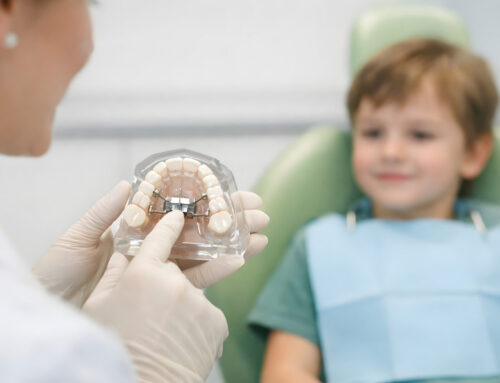
For children with a narrow upper arch or a lower jaw that sits further back than expected, early treatment often focuses on guiding growth rather than correcting it after the fact. Our practice’s proprietary Growth Modification Appliances work alongside traditional palatal expanders to gently widen the upper arch, creating more room for the tongue and helping open the nasal airway. Since a child’s bones are still developing, this stage of treatment can accomplish changes that would otherwise require surgical correction once growth has finished, which is part of why timing matters so much in these cases.
As a multigenerational family practice, Dr. Dani, Dr. Nicole, and Dr. Marissa each bring a distinct perspective to how we evaluate growing patients, building on decades of combined experience treating children throughout New Jersey and New York. Parents can learn more about our team of orthodontists and the approach each doctor brings to early treatment planning.
Schedule a Consultation With Clemente Orthodontics
If your child breathes through their mouth more often than not, waiting to see whether it resolves on its own is not always the safest option. A short conversation with our team can help determine whether your child’s breathing pattern is affecting facial growth and whether early treatment could help guide healthier development. Sleep quality, daytime focus, and even a child’s confidence in their smile can all be tied to how well they are able to breathe.
Our team is glad to walk you through what we observe during an evaluation and what options make sense for your child’s stage of growth. Contact our team today to schedule a consultation and let us help you support your child’s best development.

Medically reviewed by:
The Orthodontic Team at Clemente Orthodontics
September 14, 2026
At Clemente Orthodontics our expert dental team takes great care in providing orthodontic treatment and Invisalign solutions for our patients.