Medically Reviewed by Dr. Michael Clemente, D.M.D. on September 16, 2026
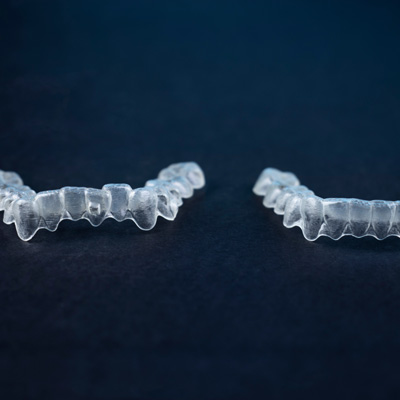 Invisalign® can treat most of the orthodontic issues traditional braces address, including crowding, gaps, and a range of overbite, underbite, and crossbite cases. Whether it is the right fit for a specific case depends on how severe the misalignment is and whether the correction can be made with tooth movement alone. At Clemente Orthodontics, we can tailor an Invisalign® treatment plan that meets your specific needs, helping you achieve a healthy, beautiful smile.
We have extensive experience using Invisalign® to help patients achieve their ideal smile. As a Diamond Plus Invisalign® provider, we are in the top 1% of Invisalign® specialists nationwide, and our team has successfully treated cases ranging from mild crowding to more advanced bite problems.
What Dental Problems Can Invisalign® Successfully Treat?
Invisalign® can address several dental issues, as long as the trays are used properly and as directed by your dental team. Some of these issues include:
Crowded Teeth
Invisalign® can help align crowded teeth, as the personalized trays can be made to create space for them. Shifting your teeth through constant pressure, Invisalign® straightens out your individual teeth and smoothes out the curve of your arches. This process not only makes your teeth look better but also makes it much easier to maintain oral hygiene.
Gaps Between Teeth
Invisalign® works to eliminate gaps between teeth in a similar way that it creates space for crowded teeth. Using constant pressure to shift each tooth into the healthiest and most functional position, Invisalign® ensures that your smile looks even and full. Reducing gaps between your teeth will also prevent other dental issues, such as infections or bacterial build-up.
Bite Issues, Including Crossbites
While some providers may claim that Invisalign® does not work for certain bite problems, an experienced orthodontist can treat a wide range of issues, including mild to moderate overbite, underbite, and crossbite. Correcting the bite will also help strengthen and realign the jaw so that the entire oral cavity is more healthy, functional, and comfortable. Our guide to overbites, underbites, and crossbites breaks down how each of these issues is diagnosed if you are not sure which one applies to your smile.
Clemente Orthodontics has the skills and experience necessary to treat bite problems, depending on the circumstances.
What Invisalign® Typically Cannot Fix on Its Own
Invisalign® is versatile, but it is not the right tool for every case. Severe skeletal jaw discrepancies, where the upper and lower jaw are significantly mismatched in size or position, generally need a different approach, sometimes involving traditional braces or, in rare cases, surgical orthodontics. Teeth that are severely rotated, tipped, or displaced can also be difficult for aligners alone to correct fully, and very large gaps sometimes respond better to a combination of orthodontic movement and restorative dentistry.
None of this rules Invisalign® out before a consultation. Many cases that look complex on the surface are still fully treatable with aligners, and our team will tell you plainly during your evaluation if traditional braces would get you a better result faster.
Benefits and Advantages of Invisalign® for Orthodontics
There are several benefits to Invisalign® that may surprise you, many of which encourage patients to give this treatment a try. The following are some of our favorite benefits and advantages associated with Invisalign®:
- More comfortable than traditional braces
- Less noticeable than other orthodontic treatments
- Requires fewer visits to the orthodontist
- Less risk of dental emergency
- Easy to clean
- No dietary restrictions
- Faster results compared to braces in many cases
- Can improve jaw function when a bite issue is involved
- May reduce teeth grinding and jaw clenching pain tied to misalignment
- Removable
There are several reasons why patients of all backgrounds choose Invisalign® for their orthodontic care. Additionally, Invisalign® is often priced similarly to traditional braces and some other treatments, so price does not have to be the deciding factor. If you have any questions, feel free to contact us at Clemente Orthodontics for further assistance.
Is Invisalign® Effective for Teens and Adults with Orthodontic Issues?
Invisalign® is an effective orthodontic solution for people of all ages and backgrounds. In some cases, children as young as seven may be a good candidate for a particular version of Invisalign®. Most teens and adults with orthodontic problems are also good fits. Our guide to knowing if you are a candidate for Invisalign® walks through the factors we consider at a first visit.
When you work with a qualified and experienced orthodontist, such as one of our talented professionals at Clemente Orthodontics, you can maximize your comfort and precise and positive results. Please contact us if you have questions about whether Invisalign® is a good fit for you or if you have specific concerns.
Why Choose Clemente Orthodontics for Invisalign® Treatment?
At Clemente Orthodontics, we are committed to providing personalized and effective orthodontic care. As a Diamond Plus Invisalign® provider, we are among the top 1% of Invisalign® specialists in the nation, which means you will benefit from our unmatched expertise and extensive experience with this treatment. Whether you are facing minor misalignment or complex bite issues, our team of orthodontists has the knowledge and skills to help you achieve a healthy, beautiful smile.
Our team has decades of experience serving patients of all ages throughout New York and New Jersey, ensuring that every treatment plan is customized to your unique needs. If you are ready to explore Invisalign®, visit our contact form. We are excited to help you start your journey toward a perfect smile.
Frequently Asked Questions About Invisalign® Treatment
Can Invisalign fix a bad bite, like an overbite or underbite?
Invisalign can correct many mild to moderate overbite and underbite cases. More severe bite discrepancies tied to jaw size or position may need traditional braces or a combination approach instead.
Will I need traditional braces if I have severe crowding?
Not always. Invisalign has treated many severely crowded cases successfully, though a small number of very complex cases are better served by traditional braces. An in-person evaluation is the only reliable way to know which applies to you.
Can Invisalign treat a crossbite?
Many crossbite cases respond well to Invisalign, particularly when the crossbite involves individual teeth rather than a full skeletal jaw mismatch. Your orthodontist will confirm whether your specific crossbite is a good fit during your consultation.
How do I know if I am a good candidate for Invisalign?
The clearest way to know is a consultation with digital scans and X-rays, since candidacy depends on the specific type and severity of misalignment. Most teens and adults with common alignment or spacing issues are strong candidates.
What happens if Invisalign alone cannot fully correct my bite?
Your orthodontist will discuss alternatives at your consultation, which may include traditional braces, a phase of limited orthodontic treatment, or coordination with another provider for more complex jaw issues. You will know your options before starting any treatment.
About the Author
Founder, Clemente Orthodontics
Dr. Michael Clemente earned his D.M.D. from Rutgers and a certificate in Orthodontics and Dentofacial Orthopedics. He has practiced orthodontics for more than 50 years, served as an Air Force Captain, and founded the multigenerational family practice now joined by his three daughters.

Medically reviewed by:
The Orthodontic Team at Clemente Orthodontics
September 16, 2026
At Clemente Orthodontics our expert dental team takes great care in providing orthodontic treatment and Invisalign solutions for our patients.