 Your orthodontist hands you a small bag of rubber bands and explains how to hook them onto your braces, but the configuration they describe sounds nothing like the single, straight band you imagined. Triangle and box elastics are two of the most widely used elastic configurations in orthodontic care, and knowing what they do can help you understand why your treatment is working the way it is.
At Clemente Orthodontics, we are proud to serve families across Bergen County, NJ, and Rockland County, NY, from our offices in Ridgewood, Woodcliff Lake, and New City. Our team, led by Dr. Michael Clemente and his daughters, Dr. Dani Panichella-Clemente, Dr. Nicole Clemente, and Dr. Marissa Clemente, uses orthodontic elastics alongside braces and Invisalign® to guide teeth and jaw alignment with precision.
What Orthodontic Elastics Actually Do
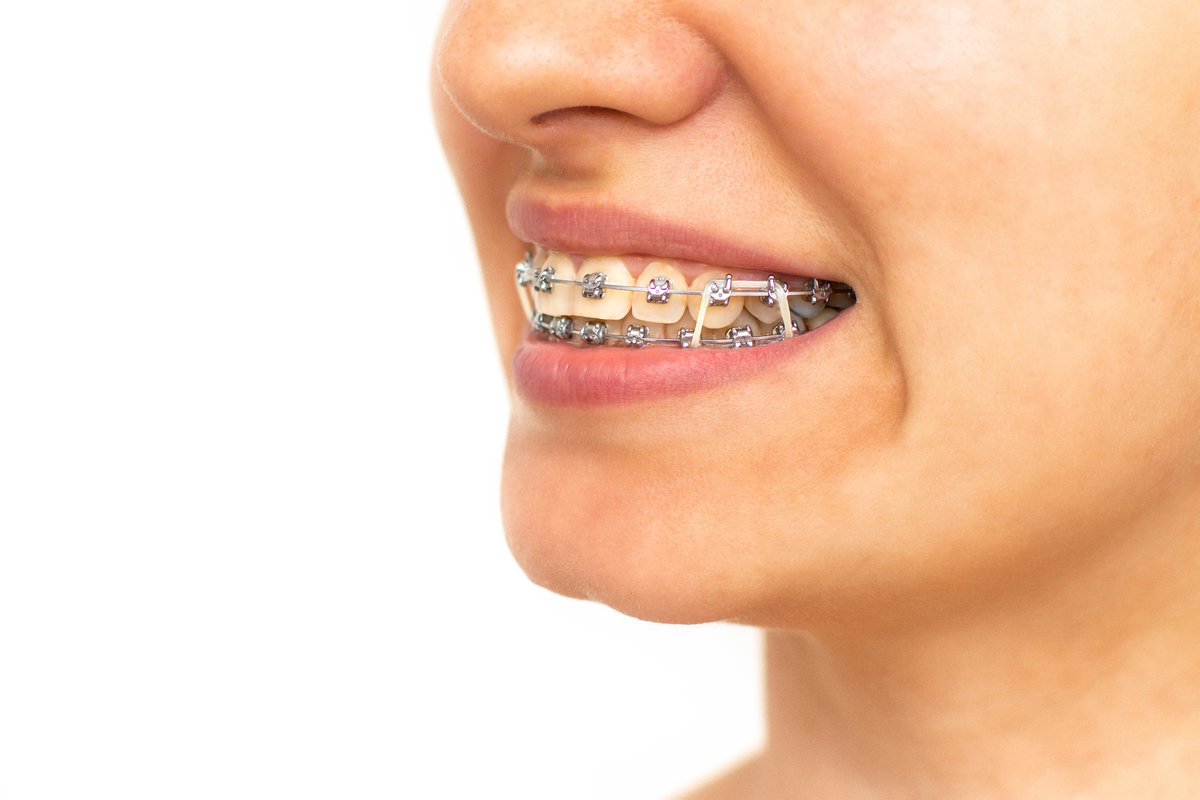
Elastics, often called rubber bands, are small loops that attach to hooks on your brackets or aligners. They apply gentle, targeted force in directions that your braces or Invisalign® cannot achieve on their own. According to the American Association of Orthodontists, the configuration of elastics is carefully selected by your orthodontist based on your specific bite needs, and they can connect teeth in the upper jaw to teeth in the lower jaw or link different teeth within the same jaw.
The shape of that configuration — whether it forms a triangle, a box, or another pattern — determines which teeth are being moved and in which direction.
Triangle Elastics Explained
Triangle elastics connect three points across the upper and lower teeth, forming a triangle shape when they are in place. One common configuration hooks onto one tooth in the lower arch and two in the upper arch, or vice versa.
When Triangle Elastics Are Used
This configuration is typically prescribed when the goal is to close an open bite, which occurs when the upper and lower front teeth do not meet or overlap when the mouth is closed. Triangle elastics are also useful for correcting a deep bite, where the upper front teeth overlap the lower ones too much. By connecting three anchor points, the bands pull teeth in opposing arches closer together in a way a single straight band cannot replicate.
The precise placement of your triangle elastics depends on where the correction is needed most, and we will map out those points for you at your appointment.
Box Elastics Explained
Box elastics connect four points, creating a square or rectangular shape between the upper and lower arches. All four corners anchor to specific brackets, and the tension they generate applies force to a section of teeth rather than just one or two.
When Box Elastics Are Used
Box configurations are most often used to address posterior open bites, which are gaps that appear between the upper and lower teeth toward the back of the mouth. They can also help with midline corrections, bringing the center of your upper and lower teeth into better alignment with each other. Because box elastics work on a broader area than triangle elastics, they are a practical choice when multiple adjacent teeth need to shift simultaneously.
As with all elastic configurations, the key is consistency. Wearing them for the number of hours we recommend each day keeps the pressure steady and your treatment on schedule. Skipping wear time can slow progress and extend how long you need to use them overall.
Tips for Wearing Your Elastics
Elastics are a part of treatment that depends heavily on patient participation, and a few habits can make a meaningful difference. Here are the basics we share with every patient:
- Remove them before eating: Chewing with elastics in place puts uneven stress on the bands and your brackets, and it raises the risk of accidentally swallowing one.
- Change them daily: Elastics stretch and lose tension over time. Fresh bands provide consistent force throughout the day.
- Have extras on hand: Keep a small bag of your prescribed elastics in your backpack, purse, or car so a broken band never leaves you without.
- Put them back in after meals: Every hour counts. Reinserting your elastics after brushing and eating keeps your treatment moving.
Staying consistent is the single most effective thing you can do to keep your treatment timeline on track. Our team at our braces services page explains how each component of your treatment fits together, and metal braces patients in particular will find elastics are a standard part of their care plan. For a deeper look at how rubber bands work across different treatment types, our post on orthodontic elastics and rubber bands covers additional detail.
Schedule Your Consultation at Clemente Orthodontics
Triangle and box elastics are small tools with a significant role in achieving a healthy bite and a well-aligned smile. Every configuration we prescribe is chosen with your specific treatment goals in mind, which is why our team of orthodontists takes time to walk each patient through exactly what their elastics are doing and why.
Clemente Orthodontics has completed over 10,000 Invisalign® cases and holds Sapphire Invisalign® Provider status, placing us among a select group of providers in the country. Whether you are in active treatment with us or considering starting orthodontic care for yourself or your child, we are here to answer every question along the way. To get started, contact our office and request your complimentary consultation today.

Medically reviewed by:
The Orthodontic Team at Clemente Orthodontics
June 9, 2026
At Clemente Orthodontics our expert dental team takes great care in providing orthodontic treatment and Invisalign solutions for our patients.